George Washington never had wooden teeth. The historians at Mount Vernon are firm about that. His dentures were built from hippopotamus ivory, human teeth, gold wire springs and brass screws, which is a lot more interesting than a block of pine.
He also had opinions about how they fit, and any dental lab that has handled a denture remake will recognize them.
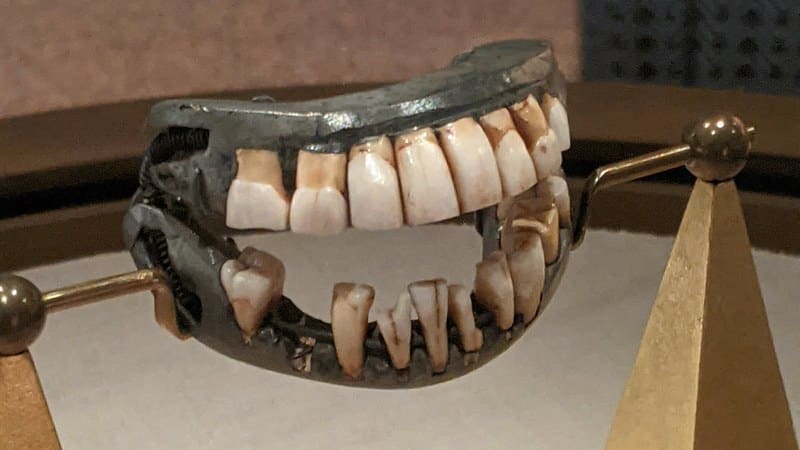
George Washington’s dentures, on display at Mount Vernon. Photo: BakedintheHole, Wikimedia Commons, CC BY-SA 4.0.
The first president’s dental lab problem
By the time he took the oath of office in 1789, Washington had one real tooth left. Over the years he wore sets from more than one maker, and he wasn’t shy in his letters. Writing about a set from his New York dentist, John Greenwood, he said the teeth were uneasy in the mouth and pushed his lips out, and that they had worked loose over time.
That is classic denture feedback. It describes a feeling, not a measurement. The maker has to work backward from “it feels wrong” to the step where it went wrong, with the patient hundreds of miles away.
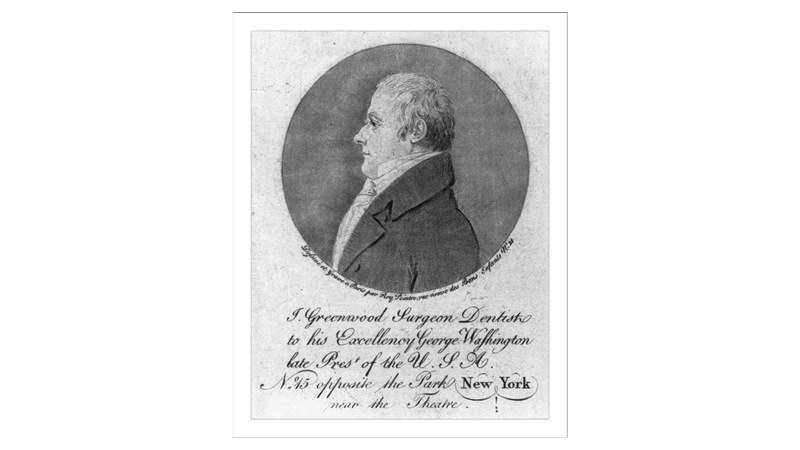
“Surgeon Dentist to his Excellency George Washington”: an engraving of John Greenwood, Washington’s New York dentist. Library of Congress, via Wikimedia Commons.
Feedback still travels the long way
Two centuries later, the materials have changed beyond recognition. The path a complaint takes has changed much less. A patient tells the doctor something feels off. The assistant calls the lab. Someone at the front desk writes a note. By the time it reaches the technician, “the bite feels high on the left side” may have turned into “remake, fit.”
Every hand-off loses detail, so the case that comes back is harder to fix than it should be. And because the reason never lands anywhere it can be counted, the same problem tends to show up again next month from the same office.
Put the feedback on the case
The labs that handle this well make the case the place where feedback lives. The doctor’s note, a photo of the fit, the reason for the remake: all of it attached to the case instead of to somebody’s memory.
In Evolution, a remake or repair is its own case type, tied to the original case, the account and a remake reason. Doctors who use the EvoDOCTOR Portal can submit cases, add notes and images and check status from a browser, and each of those actions is recorded on that doctor’s account in Evolution automatically, where your staff can see it.
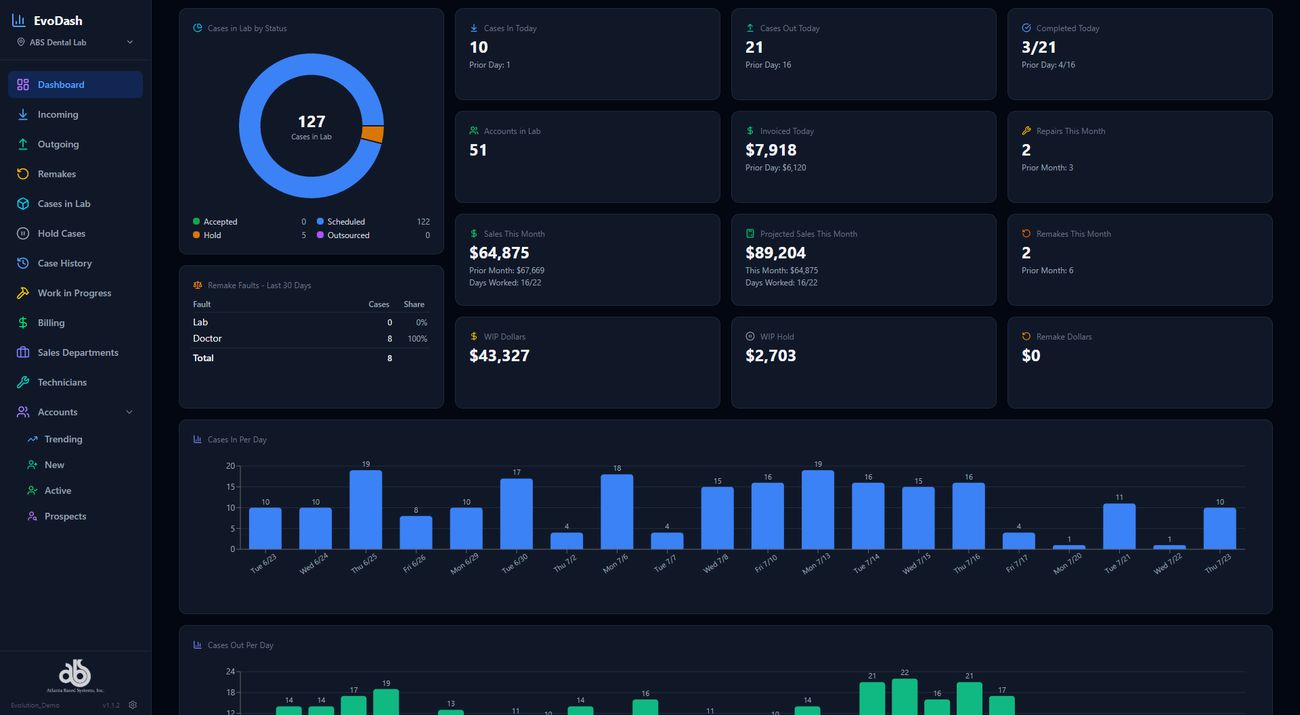
Labs running our EvoDASH dashboard see remakes over time, the split between lab and doctor, and the accounts sending the most remakes on one screen. We wrote recently about why remakes tend to come from a short list of accounts.
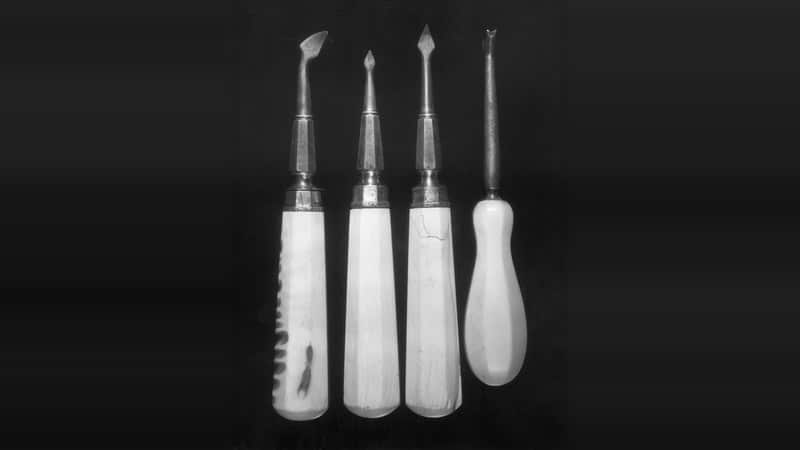
Paul Revere advertised false teeth in Boston starting in 1768. These instruments are believed to have been his. Photo: Otis Historical Archives, National Museum of Health and Medicine, via Wikimedia Commons, CC BY 2.0.
What this means for your lab
Pull your last five remakes. For each one, can you say what the doctor reported, in their words, and which step it traced back to? If the answer lives in someone’s head or a voicemail, that is the gap. Start writing the reason on the case every time, and in three months you’ll have a pattern instead of a pile of stories.
See how it works for your lab
If you’d like to see how Evolution keeps the doctor’s feedback, the remake and the original case together, we’re happy to walk you through it. No commitment. Just reach out.
Learn more about ABS and Evolution
Follow ABS on Facebook, Instagram, LinkedIn, and X. Please contact us directly if you’d like to learn more about Evolution dental lab management software.