The National Association of Dental Laboratories built a two-day certificate program this year, and the reason they gave for it is the most useful sentence in the industry right now: the need for qualified managers has been identified as one of the top issues currently impacting the dental laboratory industry.
Not equipment. Not offshore pricing. Managers.
HOW MOST LAB MANAGERS GET THE JOB
The path is nearly universal. Someone is the strongest technician in the department. They are fast, their remakes are low, and other techs already ask them questions. A department opens up, and promoting them is the obvious call.
Then the job changes underneath them. The skill that earned the promotion, doing excellent work with their hands, is not the skill the new role needs. The new role needs capacity planning, exception handling, and the willingness to interrupt someone else’s work. Most new managers get none of that in writing. They get a title and a department.
What follows is predictable. They keep doing bench work, because bench work is what they are good at and what feels productive. The management half happens in gaps. Cases go late for reasons nobody catches until a doctor calls, and the lab absorbs the cost of a manager who is now neither a full technician nor a full manager.
THE FIRST NINETY DAYS ARE A VISIBILITY PROBLEM
Ask a new production manager three questions on a Tuesday afternoon and you will learn where the real gap is.
Which cases in your department are late right now. Which technician is behind. What is on hold, and why.
At most labs, those answers live in three places: a list printed this morning, someone’s memory, and a walk to the back of the building. A manager with fifteen years in the department can run on that. They know which doctor calls at 4:00 and which tech gets quiet when they are underwater. That is pattern recognition built over a decade, and it is not transferable.
A manager in month three has none of it. Every question costs a lap around the floor, and the laps are why they are not managing.
WHAT TO GIVE THEM INSTEAD
Three things close most of the gap, and none of them require a new hire.
Set the teams up properly first. In Evolution, production manager tools depend on technicians being linked to their managers in the Managers form under the Maintenance menu. Labs skip this, then conclude the tools do not work. They work. They just have nothing to filter on until the teams exist. Do this before anything else.
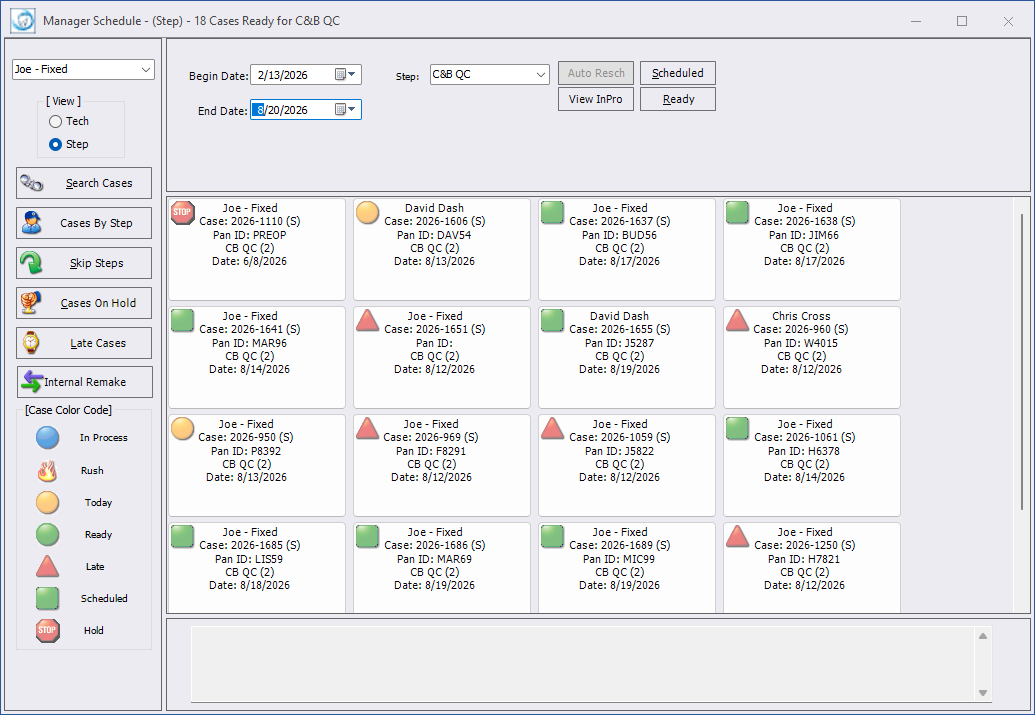
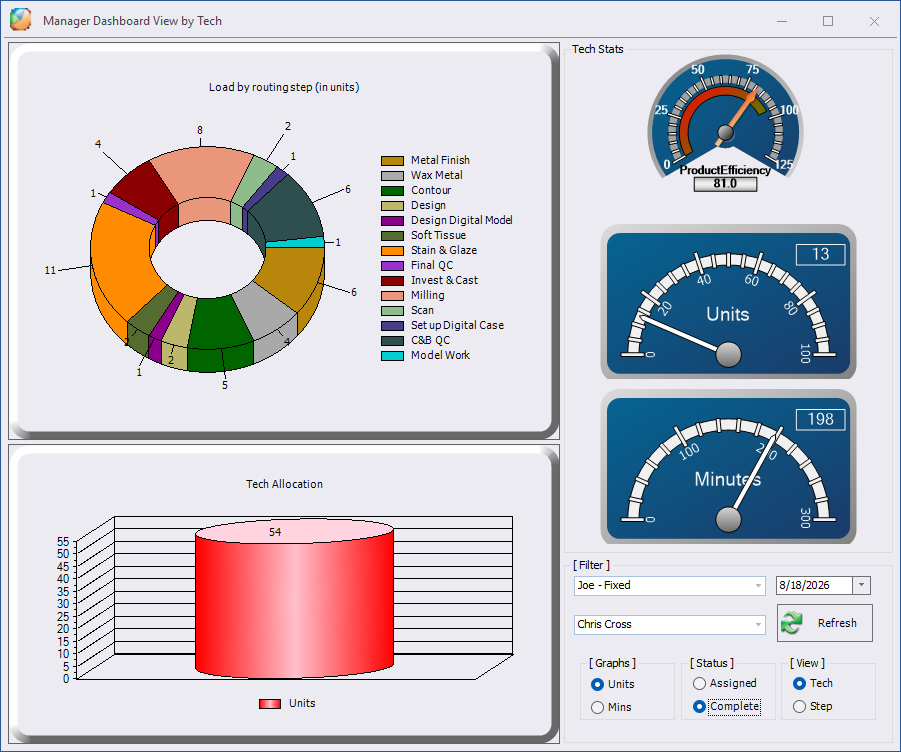
Give them the manager view, not the lab view. A lab-wide late case list is not a management tool for a department head, it is noise with their cases buried in it. What a production manager needs is their own bench, filtered to their own technicians, current as of now. Evolution’s manager schedule and manager dashboard do that filtering, which is the whole reason the team setup matters.
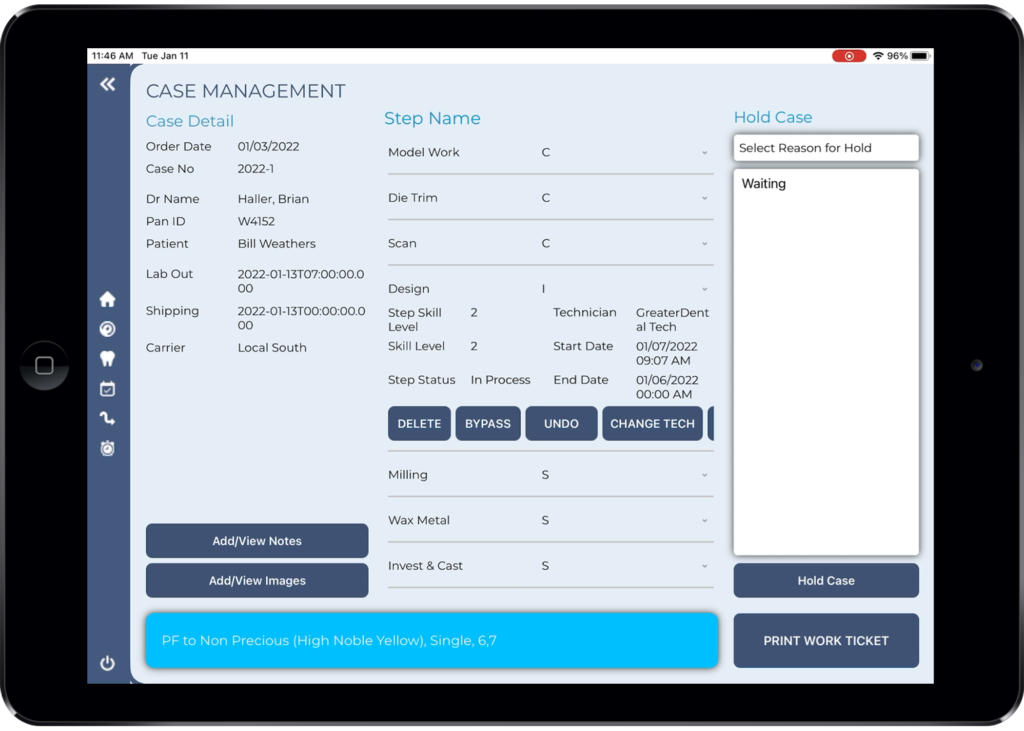
Let them fix things from where they are standing. Most of a manager’s day is exception handling: reassign this case, put that one on hold, bypass a step, print an updated work ticket. If every one of those requires walking back to a desk, they will batch them, and batching exception handling is how cases go late quietly. The EvoMGR tablet app exists to move those actions to the bench.
WHAT VISIBILTY DOES NOT FIX
Software will not make someone a good manager. It does not teach them how to tell a technician their work is slipping, or how to decide which of two late cases gets the last hour of the day. Those are judgment calls, and judgment comes from doing the job with feedback.
What visibility does is shorten the feedback loop. A manager who can see that a case sat idle for nine hours learns something on Tuesday instead of finding out at the end of the month. That is the difference between two years of learning and six months of it.
It also makes the training conversation possible. You cannot coach someone on a decision you cannot see them make. Once the department’s data is visible to both of you, a weekly fifteen-minute review of what went late and why becomes the apprenticeship the industry never built.
WHAT THIS MEANS FOR YOUR LAB
If you promoted a technician into a management role in the last two years, assume they are carrying this gap and assume they will not raise it. People who were promoted for competence rarely volunteer that they feel incompetent.
Start with three concrete steps. Confirm the manager teams are actually set up in your system, because half of labs find out they never were. Sit with the new manager and watch them answer the three questions above, timing how long each takes. Then hand them the tools that shorten the answer.
NADL is running its management certificate program in Tempe on September 17 and 18. If you have a new manager, that is two days well spent.
SEE WHAT THIS LOOKS LIKE IN YOUR LAB
If you are on Evolution and are not sure whether your manager teams are configured, we will walk through it with you. No commitment, and it usually takes under half an hour. Contact your favorite ABS Support technician.
Learn more about ABS and Evolution
Follow ABS on Facebook, Instagram, LinkedIn, and X. Please contact us directly if you’d like to learn more about Evolution dental lab management software.