

Man’s best friend has fought alongside soldiers since the ancient times. Military dogs take on indispensable roles like tracking, explosive detection and search and rescue. So, needless to say, those Military Working Dogs (MWDs) deserve the proper dental care needed to stay healthy.
DOG DENTAL CARE TRAINING
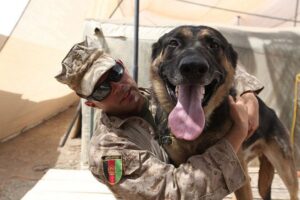
Thanks to the 60th Dental Squadron and the University of California Davis School of Veterinary Medicine, military dentists are receiving training on how to provide proper dental care to dogs. Since their teeth are their most effective weapon, it’s important that they maintain good oral health to be effective.
According to the article from dvidshub.net:
“…the partnership took shape in the form of the first-ever MWD dental health joint symposium, June 28, 2023, at UC Davis with a series of training workshops covering topics such as periodontal disease, vital pulp therapy, root canal therapy, and tooth wear.”
UNIQUE TRAINING RESULTS
One major result of this unique training is the development of new military dental residents. This will impact MWD dental care knowledge across the globe. Trainees will be able to transfer their expertise into the field and conduct dental exams, perform dental procedures, and provide post-operative care for these dogs.
“The collaboration serves as an example of the power of community partnerships and their ability to drive significant positive change. The joint commitment helps to ensure the MWDs serving at Travis Air Force Base and beyond receive the dental care required to serve.”
LEARN MORE ABOUT EVOLUTION
Follow ABS on FaceBook and Twitter. Please contact us directly if you’d like to learn more about Evolution dental lab management software.




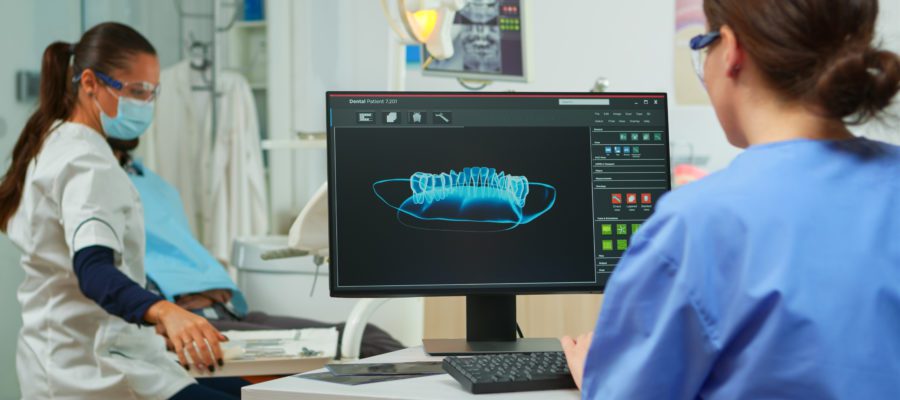
 AI (artificial intelligence) applications can be used to show the patient their expected results before any treatment. Seeing these results can inspire the patient to take action and decide to begin treatment. When a patient has the ability to actually see the outcome, they’re not so focused on the treatment.


 This
This 
 The concept of combining sparkling water with vinegar to make a healthier sweet drink has been around for some time. Shrubs are fruit and vinegar-infused syrups that can be used in other drinks like cocktails, for example. Using a sweeter vinegar like balsamic eliminates the need to add sugars.


