
There is almost no aspect of managing a dental laboratory that is more important than speedy and reliable communications with their dentists. This practice is required to provide patients with the ultimate satisfaction in the products you provide, making it paramount for continued growth in your business.

Recently, The Journal of Dental Technology interviewed two dental lab industry experts who shared their experiences on setting “achievable expectations and build[ing] successful relationships through confident communication.” NADL members can read more about it in JDT’s May 2021 article, Communicate with Confidence.
Within the article, the subjects mention many of the well-known independent communication options, such as the, exploding-in-popularity, Zoom meeting and “email, phone, FaceTime, text, IM, live chat, etc.” While all of these options are great (not to mention, irreplaceable), there are even more options.
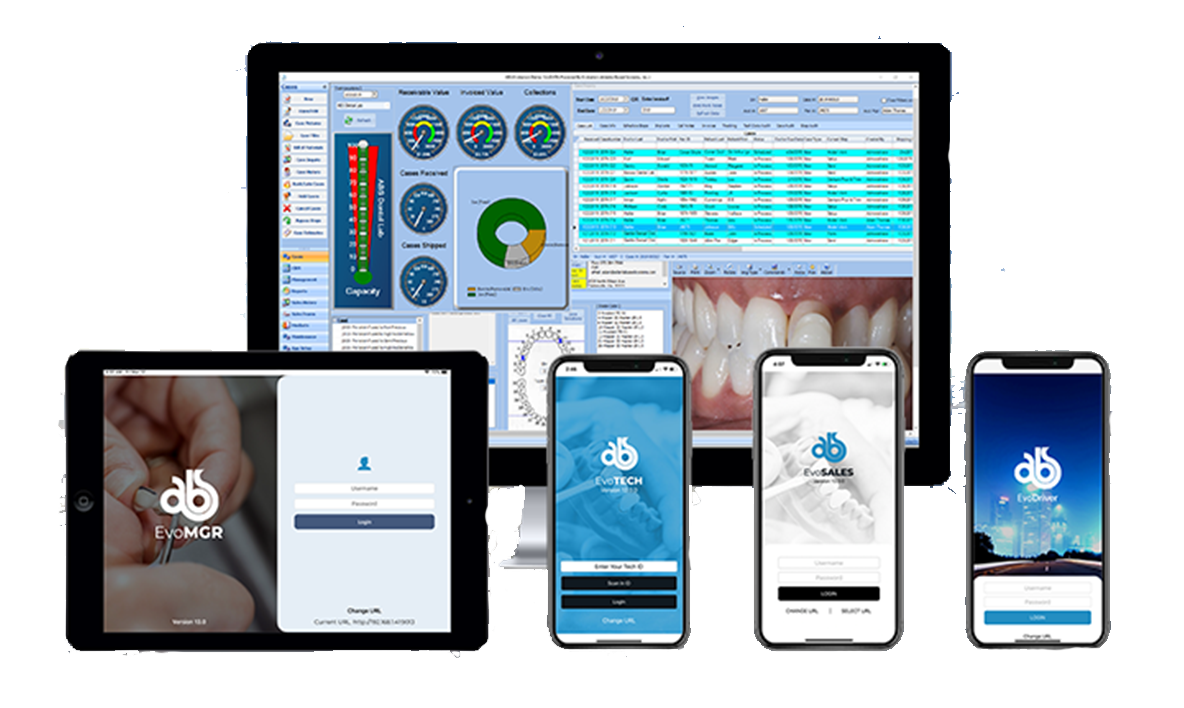
Some of those other communication options have the ability to be integrated within Atlanta Based Systems’ Evolution dental lab management software. Take our EvoDOCTOR Portal, for example. Your doctors can login to send notes and attach files to cases. They can also request pickups by local drivers and even live-chat with an online employee in your lab.
With ABS and Evolution, internal notifications and automated emails can be set up so that lab employees can be notified when dentists communicate through their portal. These automatic email templates for your dentists can also be triggered to let them know when the lab receives, reschedules or ships a case. The EvoDOCTOR Portal, integrated with your Evolution dental lab management software, could be used as an indispensable communication tool for your laboratory.

Also, with the new Digital Rx integration, your doctors can upload completed digital prescriptions directly to your lab. All they would need to do is login to their EvoDOCTOR Portal account and click on the link to fill out the prescription online. Once they’ve completed the form and added any notes or images, they would just upload that file to the case.
But wait, there’s more. Effective communications don’t stop with clients and lab administrators. Let’s not forget that there are other positions within the dental lab industry that need to be able to effectively communicate with members of your and your dentists’ teams. Take for instance your local drivers. They would certainly need to be notified if there has been a note added to a pickup request or any changes in deliveries or pickups on their routes. ABS has developed a fully-integrated mobile app solution for that, called EvoDRIVER.

What about your sales and customer service staff? In addition to the CRM within the ABS EvoDATA desktop application, we have also created a mobile CRM app called EvoSALES. This application gives your sales people (or customer service staff) the ability to add notes to accounts. There is even the ability to assign messages to specific lab members so they can receive instant notifications with the notes your EvoSALES users put into the system.
We, at Atlanta Based Systems, agree that effective communications are essential to the success of dental laboratories. What’s more? Evolution is capable of automated communications between the lab, its customers and employees. Even better, these automated communications can integrate directly with your dental lab management software. With Evolution, all of your communication needs are covered.
Please contact us if you are interested in learning more.




 The precision required by an IOS is highly dependent on proper calibration of the device. That precision can sometimes be hindered by a limited number of trained operators with calibration responsibilities. In a high-volume dental institution, more calibrations could be necessary due to vibrations during transport, relocation and dropping the device. Some newer technology allows for auto-calibration through the scanner manufacturer’s server, but most still require manual calibration.


 In March, The New York Times listed Dentistry as one of the professions at highest-risk of the novel coronavirus infection. In light of the study, the vice president of the ADA Health Policy Institute, Marko Vujicic, Ph.D., said, “The fact that dentistry was named one of the most at-risk professions for infection, but has a far lower prevalence of infection compared to other health professions, is not a coincidence. The profession has taken this issue extremely seriously, and it shows.”
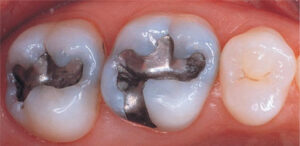 Although the FDA defines these groups as ‘maybe’ having a higher-risk of negative health effects from dental amalgam, they don’t appear to provide any new evidence of this being the case. In fact, after the FDA released their statement, the ADA (American Dental Association) released their own press release reaffirming its position on dental amalgam.