
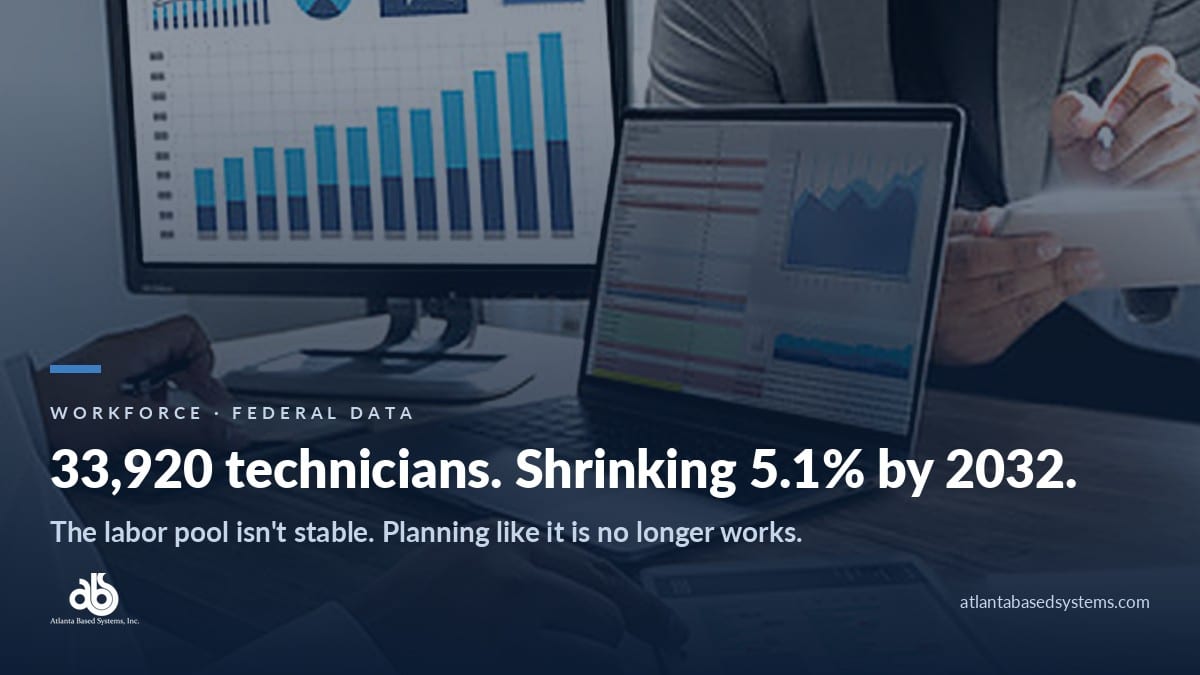
There are 33,920 dental laboratory technicians working in the US right now. According to federal labor projections, that number is expected to shrink by 5.1% over the next several years, even as the overall job market keeps growing. Roughly 150 openings a year get created nationally, and almost all of them come from people leaving the field, not from new positions being added.
That’s worth sitting with for a second, because it changes the question labs should be asking. This isn’t “how do we hire our way out of a tight quarter.” It’s a structural, multi-year contraction in the number of people who can do this work at all.
Why “just hire more” stops working
Most labs still plan staffing the way they always have: when volume goes up, post a job, wait for applicants, train them in. That approach assumes the labor pool is roughly stable and just needs the right recruiting push.

The federal data says that assumption is wrong. The pool itself is getting smaller. A lab competing for a shrinking group of qualified technicians against every other lab in the region isn’t solving a hiring problem with a better ad. It’s competing for a resource that federal projections say keeps declining through the early 2030s.
What actually moves the needle instead
If you can’t reliably add technicians, the only lever left is getting more out of the ones you already have, and that starts with actually knowing what they’re producing.
Most labs can tell you total case volume for the month. Far fewer can tell you, in the moment, what any individual technician has finished today, where a specific case is sitting right now, or which step in the workflow is quietly eating the most time. Without that visibility, “we need more people” becomes the default answer to every capacity problem, even when the real issue is a bottleneck two steps upstream that’s invisible without real-time data.

Labs that track technician output and case status in real time aren’t immune to the shortage. But they’re not flying blind through it either. They can see where a backlog is actually forming, decide whether it’s a staffing problem or a workflow problem, and make that call with data instead of a hunch.
See what’s coming for your lab
The technician shortage isn’t a headline that will pass. It’s a demographic trend with a multi-year runway, and it’s already shaping which labs can take on more cases and which ones are stuck turning work away. The labs that come out ahead won’t be the ones who found more technicians. They’ll be the ones who knew, day to day, exactly where their existing team’s time was going.
If you’ve been running on gut instinct about what your technicians are producing, we’d be glad to walk through what a real setup looks like for a lab your size. Contact us
Learn more about ABS and Evolution
Follow ABS on Facebook, Instagram, LinkedIn, and X. Please contact us directly if you’d like to learn more about Evolution dental lab management software.