Month: October 2026

Nobody becomes a dental technician because they love spreadsheets. They come for the work: a contact that seats, a shade that disappears into the smile, a denture that finally feels right to someone who has struggled for years.

Then, for a lot of them, the job changes.

THE BENCH FIRST, THE BUSINESS SECOND

The path into lab management usually runs straight up from the bench. The strongest technician becomes the department lead, then the production manager, and some of them end up owning the lab. Each step adds more of the business and less of the craft they trained for, and almost nobody hands them a manual on the way.

That gap is the reason for a new book this month, The Optimized Dental Laboratory by Daniel Alter, a CDT who owned and ran a midsized lab for more than a decade before selling it. It is written for owners, managers and technicians moving into leadership, with 14 chapters and a set of browser-based tools for putting the ideas to work. It is good to see the business side of a lab treated as something worth teaching.
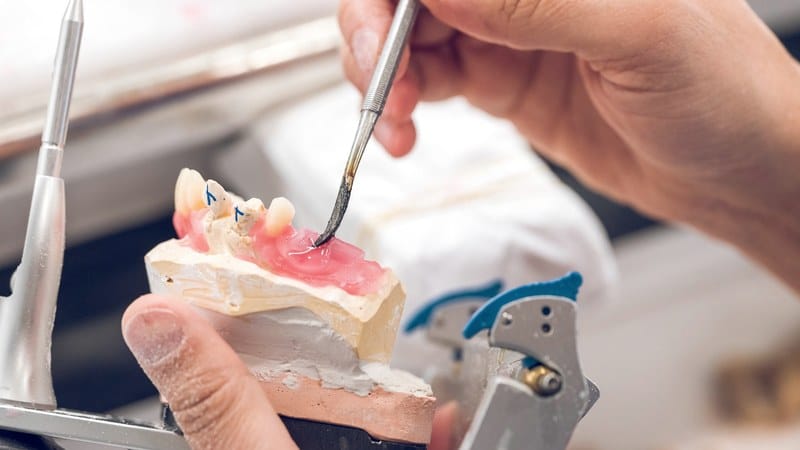
Dental technician setting a denture tooth into wax with a spatula

WHAT THE SECOND CRAFT LOOKS LIKE

Running a lab well is a skill set of its own. Pricing work so the busy accounts are also the profitable ones. Scheduling so that one technician isn’t buried while another has room. Staffing ahead of a busy month. Collecting what you are owed without souring a relationship. Noticing when a good account quietly starts sending less.

Like learning to read a prep or build a natural incisal edge, none of this comes from a single lesson. It comes from repetition and feedback, over and over, until you can see a problem coming before it arrives.

PRACTICE NEEDS FAST FEEDBACK

At the bench, feedback is immediate. You can see the margin, check the contact and fix it before the case leaves. Management feedback is usually slow. The month closes, the reports run, and you find out what happened weeks after you could have done anything about it.

The fix is to shorten the loop. In Evolution, the numbers a manager needs live in the same system the lab already works in, and EvoDASH puts the daily ones in front of you: cases that came in today, what has been invoiced, each technician’s completed steps, and which accounts are trending up or down. When the feedback arrives the same day, you get many more chances to practice the second craft each month.

Two people comparing printed reports across a desk

WHAT THIS MEANS FOR YOUR LAB

Give the management work real time on the calendar, an hour a week at minimum, instead of whatever is left at the end of the day. Pick three numbers to look at every morning and learn what normal looks like for each. And find people who have walked the same path. The NADL’s Vision 21 meeting in Las Vegas this January is one good place to start.

If you are moving from the bench into leadership right now, you are in good company. Most of the people running labs today started exactly where you are.

PRACTICE WITH BETTER NUMBERS

If you would like to see how Evolution and EvoDASH could shorten the feedback loop in your lab, we would be happy to show you. Get in touch here.

LEARN MORE ABOUT ABS AND EVOLUTION

Follow ABS on Facebook, Instagram, LinkedIn, and X. Please contact us directly if you’d like to learn more about Evolution dental lab management software.
Most dental technicians have a busy season. Very few of them have one that lines up with Halloween.

A while back, Lab Management Today profiled a New Mexico fangsmith, a former horror novelist who learned the trade and turned it into his full-time work. His story is a fun read, and it carries a lesson about case volume that any dental lab owner will recognize.

A craft with a calendar

The process will sound familiar. Customers take their own alginate impression from a mail-in kit. He pours a stone model, builds the fangs from temporary crown and bridge resin, polishes them and ships them back with a kit to adjust the fit. His customers are actors, musicians, artists and cosplayers.

Most months he makes about 80 sets. In Halloween season it can climb to 450. The magazine’s best detail is a theater company that came to him after the fangs from its previous production gave the entire cast a lisp. Fit is fit, even on a vampire.

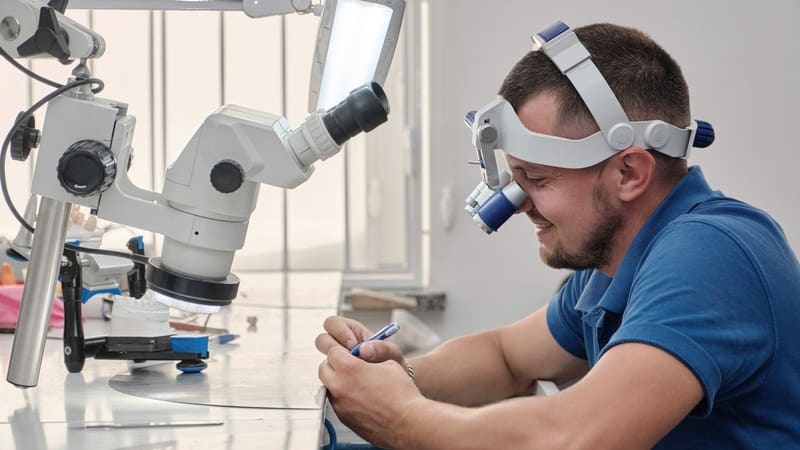
Dental technician working under a microscope with loupes

Your lab has an October too

A dental lab’s spike rarely arrives with a costume. It looks like a year-end push from offices whose patients want to use their dental benefits before they reset in January. It looks like a large account adding a doctor, or a few technicians taking vacation in the same two weeks. The bench feels it before anyone in the office has a number for it.

The fangsmith knows exactly when his rush starts. Most labs find out partway through, when turnaround slips and the phone starts ringing with status calls. By then the choices are overtime or late cases.

See the case volume before it reaches the bench

The fix is to watch incoming work the way you watch the calendar. How many cases came in today. How this month compares with last month. How this month compares with the same month last year, for each account.

That is what EvoDASH puts on one screen. Labs can keep the day’s incoming cases, remakes and repairs and this month’s projected sales in front of them, and the Sales History view compares any month with the same month last year for an account, a product or a department. When one office starts sending noticeably more than it did last October, you see it in the first week, not the fourth.

Lab owner at a desk with a monitor and a stack of reports

None of this makes the busy season smaller. It makes it predictable, and predictable is what lets you staff it, schedule it and keep doctors informed before they have to call.

What this means for your lab

Pick the one or two months that hurt most last year. Before they come around again, decide what number would tell you the rush has started: incoming cases per day, a key account’s volume against last year, or work in progress per technician. Then put that number somewhere you will see it every morning.

See your busy season coming

If you would like to see what that morning view looks like with your own accounts, we are glad to walk you through it. Get in touch.

Learn more about ABS and Evolution

Follow ABS on Facebook, Instagram, LinkedIn, and X. Please contact us directly if you’d like to learn more about Evolution dental lab management software.

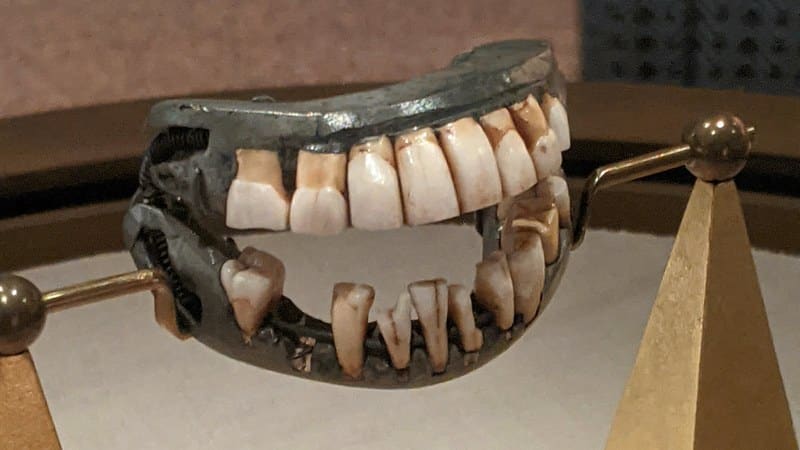
George Washington never had wooden teeth. The historians at Mount Vernon are firm about that. His dentures were built from hippopotamus ivory, human teeth, gold wire springs and brass screws, which is a lot more interesting than a block of pine.

He also had opinions about how they fit, and any dental lab that has handled a denture remake will recognize them.

George Washington's dentures with lead bases, human and animal teeth and coiled springs, on display at Mount Vernon

George Washington’s dentures, on display at Mount Vernon. Photo: BakedintheHole, Wikimedia Commons, CC BY-SA 4.0.

The first president’s dental lab problem

By the time he took the oath of office in 1789, Washington had one real tooth left. Over the years he wore sets from more than one maker, and he wasn’t shy in his letters. Writing about a set from his New York dentist, John Greenwood, he said the teeth were uneasy in the mouth and pushed his lips out, and that they had worked loose over time.

That is classic denture feedback. It describes a feeling, not a measurement. The maker has to work backward from “it feels wrong” to the step where it went wrong, with the patient hundreds of miles away.

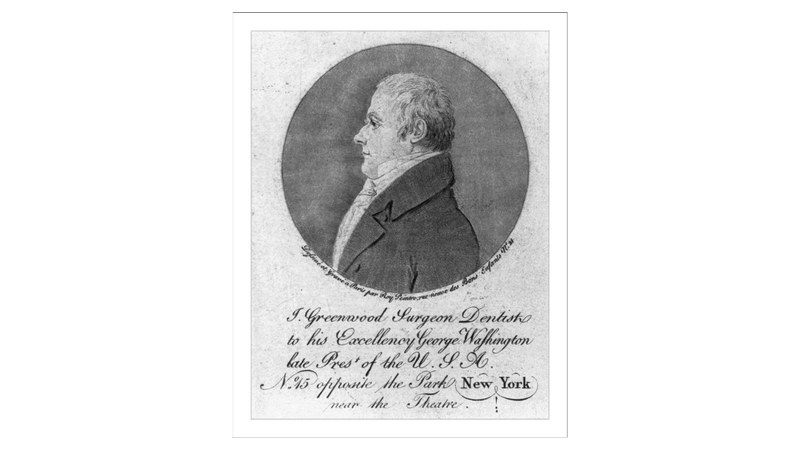
Engraved portrait of John Greenwood captioned Surgeon Dentist to his Excellency George Washington, New York

“Surgeon Dentist to his Excellency George Washington”: an engraving of John Greenwood, Washington’s New York dentist. Library of Congress, via Wikimedia Commons.

Feedback still travels the long way

Two centuries later, the materials have changed beyond recognition. The path a complaint takes has changed much less. A patient tells the doctor something feels off. The assistant calls the lab. Someone at the front desk writes a note. By the time it reaches the technician, “the bite feels high on the left side” may have turned into “remake, fit.”

Every hand-off loses detail, so the case that comes back is harder to fix than it should be. And because the reason never lands anywhere it can be counted, the same problem tends to show up again next month from the same office.

Put the feedback on the case

The labs that handle this well make the case the place where feedback lives. The doctor’s note, a photo of the fit, the reason for the remake: all of it attached to the case instead of to somebody’s memory.

In Evolution, a remake or repair is its own case type, tied to the original case, the account and a remake reason. Doctors who use the EvoDOCTOR Portal can submit cases, add notes and images and check status from a browser, and each of those actions is recorded on that doctor’s account in Evolution automatically, where your staff can see it.

Labs running our EvoDASH dashboard see remakes over time, the split between lab and doctor, and the accounts sending the most remakes on one screen. We wrote recently about why remakes tend to come from a short list of accounts.

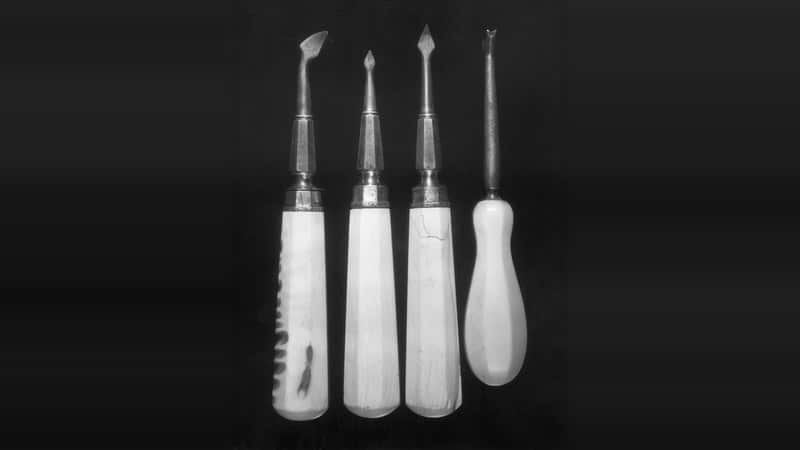
Four 18th-century dental instruments with ivory handles, believed to have belonged to Paul Revere

Paul Revere advertised false teeth in Boston starting in 1768. These instruments are believed to have been his. Photo: Otis Historical Archives, National Museum of Health and Medicine, via Wikimedia Commons, CC BY 2.0.

What this means for your lab

Pull your last five remakes. For each one, can you say what the doctor reported, in their words, and which step it traced back to? If the answer lives in someone’s head or a voicemail, that is the gap. Start writing the reason on the case every time, and in three months you’ll have a pattern instead of a pile of stories.

See how it works for your lab

If you’d like to see how Evolution keeps the doctor’s feedback, the remake and the original case together, we’re happy to walk you through it. No commitment. Just reach out.

Learn more about ABS and Evolution

Follow ABS on Facebook, Instagram, LinkedIn, and X. Please contact us directly if you’d like to learn more about Evolution dental lab management software.
Most dentists have never watched one of their crowns being made. A box arrives, the doctor seats the restoration, and the next patient is already in the chair. Everything that happened between the scan and the box stays out of sight.

That is a shame, because that hidden part is the best thing your lab has. It also makes some of the best dental lab social media there is.

The best-kept secret in dentistry

A crown that seats with no adjustment looks easy. It isn’t. Someone read the Rx and the photos, checked the margins, built the contacts and the bite, then layered porcelain or stained and glazed zirconia until the shade matched the teeth next to it. A denture got its teeth set one at a time in wax, with the midline and smile line checked by eye.

That skill is why a doctor stays with a lab for twenty years. It is also the part of the relationship the doctor sees least. Most of what they see is the box, the invoice and the occasional phone call.

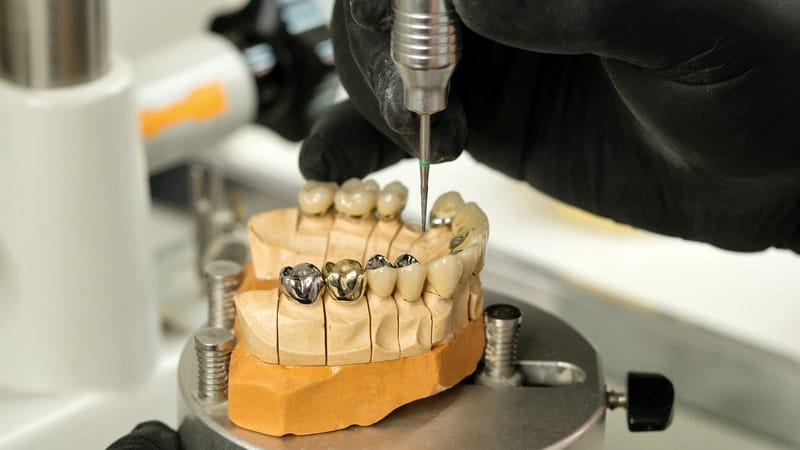
Gloved dental technician refining porcelain-fused-to-metal crowns and a bridge on a stone model with a handpiece

Why the bench makes great dental lab social media

Look through dental content on Instagram, TikTok or YouTube and you will find technicians filming over their own shoulder: porcelain going on with a fine brush, a set of denture teeth taking shape in wax, a model coming off a printer. People stop scrolling for it, the same way they stop for a woodworker or a pastry chef. Watching skilled hands work is satisfying in any trade.

For a lab, those posts do more than collect likes. A doctor who has watched your team match a shade understands why a good shade photo matters. A doctor who has seen a denture set tooth by tooth is a little more patient when a case needs another day. Seeing the craft builds respect, and respect builds loyalty.

Five easy ways to show your work

1. A 20-second clip. Prop a phone over a technician’s shoulder during a satisfying step. No voiceover needed. Let the work speak.

2. As received, as shipped. One photo of the model the way it came in, one of the finished case on the same model.

3. Meet the tech. A photo of one team member and one line about what they love about their specialty. Doctors like knowing who builds their cases.

4. The tough one. A difficult case told in three photos, with the doctor’s permission, and what made it hard.

5. An open door. Invite your best doctors and their assistants for a lab tour. Lunch helps.

One rule for all five: keep patient names, Rx forms and case labels out of the frame, and ask before you post anyone’s face or a doctor’s case.

Showing your work every day

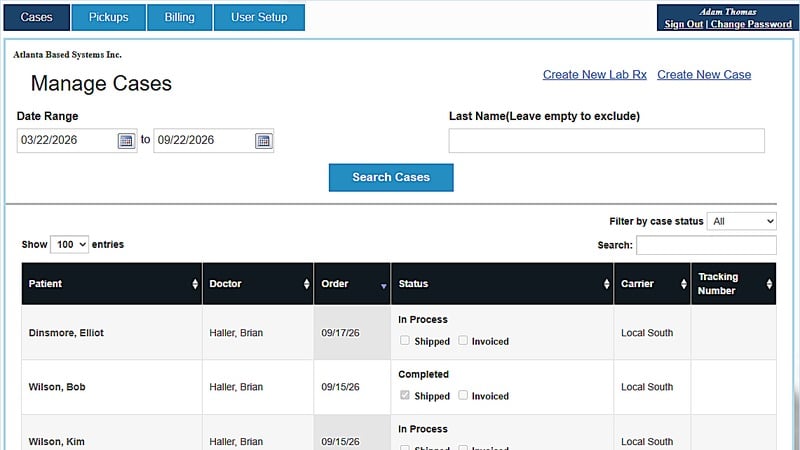
Social posts show the craft. The everyday version of showing your work is simpler: letting doctors see where their case is without calling. When a doctor can check that a case is in process, see that it shipped and find the carrier, your lab looks as organized as its work is careful.

That is what the EvoDOCTOR Portal does for Evolution labs. Doctors submit cases, add notes and images, request pickups and check status from a browser, and each of those actions is recorded on that doctor’s account in Evolution automatically, where your staff can see it. Labs that want the same experience on a phone can give their doctors their own branded EvoDOCTOR App.

Labs that want to take it a step further can choose to share photos from the bench right on the case in the portal, so a doctor can see the work before it ships. It is an option, not a default. Plenty of labs keep files on a case that are meant for the lab only, and they can leave it off.

EvoDOCTOR Portal Manage Cases screen showing demo cases with status, shipped and invoiced checkboxes, carrier and tracking number columns

What this means for your lab

This week, take one photo or one short clip at the bench and post it. This month, ask your three best doctors if they would like a tour. And take a look at how many “where’s my case?” calls your front desk handled last week. Each one is a doctor who could not see what your bench was doing.

Let your doctors see the work

If you are on Evolution and have not turned on the EvoDOCTOR Portal, or you would like to see exactly what your doctors would see, we are happy to walk you through it. Just reach out.

Learn more about ABS and Evolution

Follow ABS on Facebook, Instagram, LinkedIn, and X. Please contact us directly if you’d like to learn more about Evolution dental lab management software.
Recent Posts
Archives